Successful research is also built with communities. That is why WANECAM 3 places dialogue, listening, and trust at the heart of its activities.
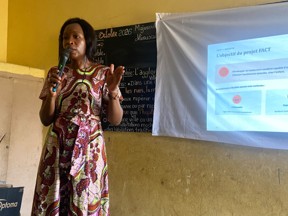
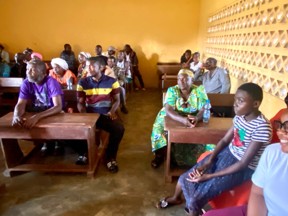
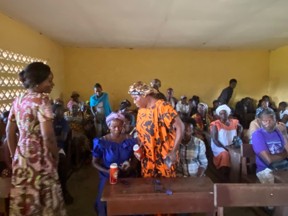
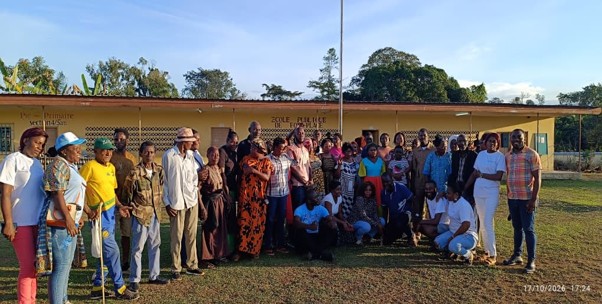
On 17 October 2026, the Centre de Recherches Médicales de Lambaréné (CERMEL), a partner in the WANECAM 3 consortium, organised a community engagement meeting at Four Place Public School, near Lambaréné, Gabon.
The meeting brought together 75 participants, including community members, local leaders, healthcare professionals, and CERMEL field workers. The objective was simple: to introduce WANECAM 3, listen to community concerns, and answer questions ahead of the project’s clinical activities in the region.
Listening, Sharing Information, and Building Trust
More than just an information session, the meeting provided an opportunity for community members to engage directly with the research teams.
Discussions focused on how clinical studies are conducted, participants’ rights, and the importance of free and informed consent. The CERMEL teams emphasised that participation in research is entirely voluntary and that participants have the right to withdraw at any time.
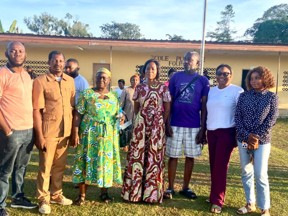
The presence of the village chief, the school headteacher, the local nurse, and field workers also helped strengthen communication between researchers and the communities.
Communities: Essential Partners in WANECAM 3
Supported by Global Health EDCTP3, WANECAM 3 aims to develop new artemisinin-free treatments for uncomplicated malaria, with the long-term goal of achieving an effective single-dose treatment.
Community engagement is essential to achieving this ambition. Keeping communities informed, understanding their expectations, and maintaining open dialogue help ensure that research is responsive to their needs and respectful of their concerns.
The meeting also provided an opportunity to share updates on the KALUMA study and thank the families already involved in this research.
Keeping the Dialogue Going
Building on more than 30 years of collaboration with communities in Lambaréné, CERMEL is committed to maintaining this dialogue throughout WANECAM 3 activities, including sharing updates on study progress and research findings.
Through this initiative, WANECAM 3 reaffirms a fundamental belief: communities are not simply participants in research; they are true partners in its success.